
Glendale Previous Residents by Era
A house history needs an era plan. Ownership records are strongest for the land and the people who transferred it. Directories and census schedules are better for household presence. Permits and maps help date the structure, but a permit applicant is not automatically a resident. The table keeps those roles separate before a search begins.
| Source | Years It Covers | Where Held | What It Shows |
|---|---|---|---|
| RR/CC real-estate copies | 1982-present at major branches; older material at Norwalk | Los Angeles County RR/CC | Deed parties, document numbers, recording dates, legal descriptions |
| Norwalk grantor-grantee indexes | 1851-1957 lower level; 1958-present upper level | Norwalk headquarters, by appointment | Named party, recording year, document title, and deed trail |
| Glendale city directories | Digitized editions from 1908 through 1989-90, with gaps | History Room, Historical Society index, Internet Archive and California Revealed scans | Listed names, addresses, occupations, spouses, and household clues |
| Telephone and reverse directories | Telephone runs 1908-1977; reverse listings begin in the teens | Glendale History Room | Address-first occupant entries for the years and volumes held |
| Federal census | Decennial schedules through 1950 are public under the 72-year rule | NARA, FamilySearch, and library databases | Household composition at an enumeration date |
| Glendale permits | Current portal principally 2005-present, incomplete | Tyler EnerGov and Community Development request channel | Construction, alteration, owner, applicant, and contractor clues |
| Sanborn fire-insurance maps | Glendale evidence documented at least by 1919 | History Room and Library of Congress | Building footprint, use, street context, and former numbering clues |
Start with the AIN and legal description when the question concerns ownership. Start with the year and address when the question concerns occupancy. For an older Glendale property, use both paths and mark each gap rather than treating a missing entry as proof that nobody lived there.
Glendale Deed Chain for Past Residents
The Los Angeles County Assessor portal accepts an AIN or address, but its public web view does not provide an owner-name search. A deed search therefore begins with a parcel bridge. Record the situs address, AIN, map reference, property characteristics, and legal description, then use an Assessor office, Property Data Sales, an existing deed, or another authorized county channel for the party name. A situs is the physical parcel address. A mailing address is where assessment correspondence goes. Neither one alone proves occupancy.
Los Angeles County RR/CC does not retrieve deeds by street address or APN. A requester needs a named party, document number, recording year, and document title. The cited schedule lists a $0.50 name/year search, with copies priced at $6 for the first page and $3 for each additional page. Follow this order:
- Normalize the Glendale address and obtain the AIN from the Los Angeles County Assessor portal.
- Use the owner evidence or an existing instrument to identify the acquisition deed and its legal description.
- Search the buyer as grantee, then record the seller or grantor, instrument number, recording date, and title.
- Search that earlier seller as a grantee in a prior year, checking that the land description still matches.
- When branch copy coverage stops, continue at Norwalk instead of ending the chain at 1982.
- Grantor and grantee
- The grantor transfers an interest. The grantee receives that interest. The role can change with the document type.
- Chain of title
- The linked sequence of recorded transfers that explains how an interest moved from one party to the next.
- Legal description
- The tract, lot, block, or other land description that identifies the parcel more reliably than a changing street label.
- Criss-cross directory
- An address-order directory section that can connect a street location with a listed occupant for a particular year.
- Enumeration district
- The census area assigned to an enumerator. It helps keep a household search within the right neighborhood and year.
The official RR/CC real-estate viewing instructions matter because they document the in-person party-and-year method. There is no truthful public Internet deed index to substitute for that process.
The branch instructions are illustrated by the Los Angeles County recorder branch directory.
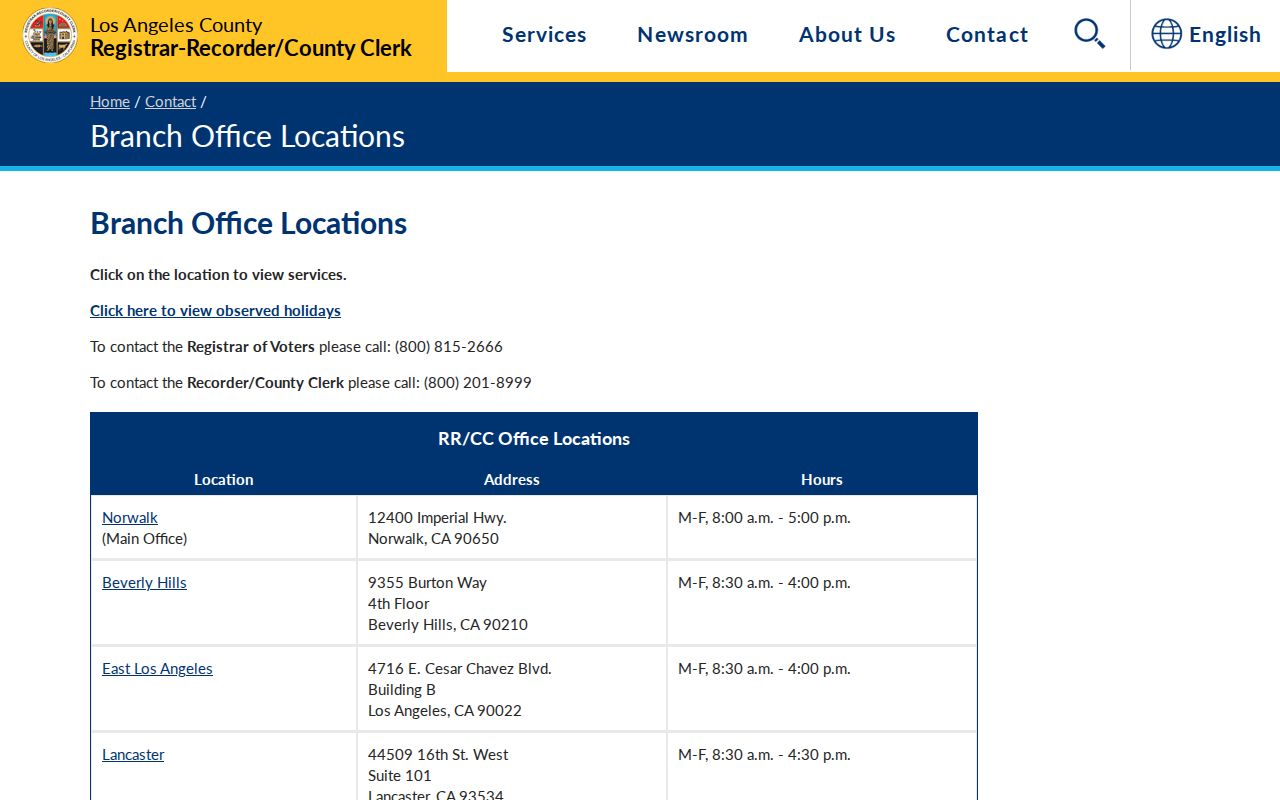
That access path keeps the deed trail tied to a named document and a defined parcel, rather than turning an address into an unsupported list of people.
Norwalk Records and Glendale House History
Norwalk is the key fallback for earlier Glendale ownership research. County material says records from 1851-1957 are reviewed downstairs, while 1958-present records are reviewed upstairs. Major branches commonly state real-estate copy coverage from 1982 forward. The full historical index is not online, so a researcher may need an appointment, a mail request, the recorder contact route, or a focused request that names the party and year. County pages differ on whether the earliest retained year is 1850 or 1851. Use 1851 for the viewer series and keep the discrepancy in research notes.
For the house itself, the City’s Historical Research Guide treats a building as a biography assembled from land, structure, people, and events. Its route moves through land and site records, building records, associated people and events, then additional sources. It names the Recorder, Assessor tax rolls, permits, city directories, Sanborn maps, census, newspapers, photographs, and local histories. Missing evidence is a prompt to try another source, not a reason to declare that a past resident never existed.
The Glendale History Room at Central Library holds reference-only books, photos, pamphlets, maps, and periodicals. Appointment access, closed stacks, and reproduction permission rules matter when a directory or local survey is not digitized.
The County contact route is shown in the RR/CC service directory.
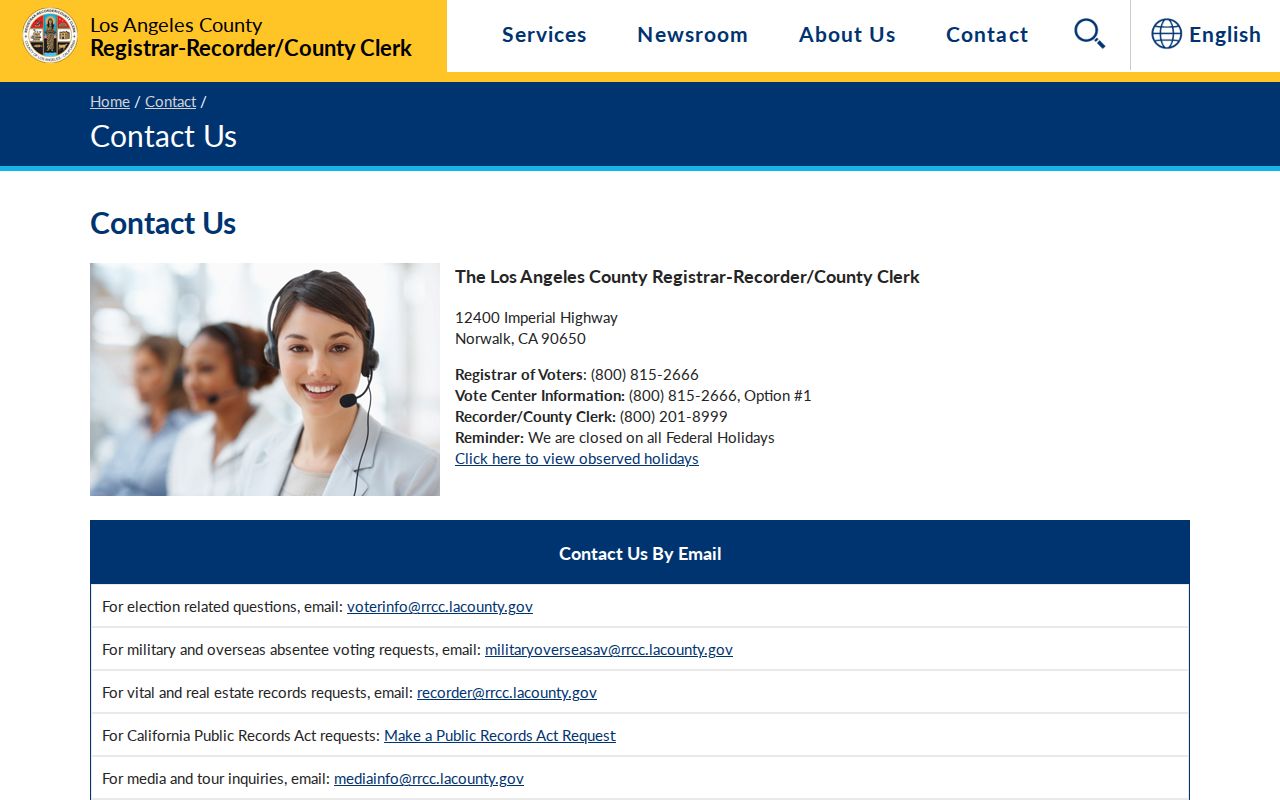
Use the image as a reminder to confirm the correct custodian before requesting a copy or planning a Norwalk visit.
Sanborn Maps Anchor Glendale Address History
Sanborn sheets add a physical check to a name search. The Library of Congress holds a June 1919 Glendale atlas with 45 sheets. A map can show that a structure, rear building, lot line, or business use existed at a point in time. It cannot name every person who lived there. Compare the sheet with the legal description, a directory address, and a later permit. If a street number changed, search the old and new label before deciding that the records conflict.
The 534 N. Kenwood example shows why several sources belong together. An official survey reports no address for the 1917 directory entry, then identifies Albert M. Draper, a refiner, as residing at 534 N. Kenwood in the 1923 Western Directory. The survey also associates construction with 1913, while a 1919 Sanborn sheet shows the building footprint. The example teaches a method, not a conclusion about every Glendale parcel.
The Library of Congress 1919 Glendale Sanborn atlas supplies the map context, and the 1923 Glendale directory scan supplies the entry context. Check the page image because OCR can distort fractions, line breaks, and names.
Glendale Directory and Census Trail
Previous residents who did not own the parcel often appear only in a directory or census. Glendale’s digitized city directory years are uneven: 1908, 1909, 1911-12, 1913-14, 1915-16, 1917, 1919, 1922, 1923, 1925-29, 1935, 1937-38, 1941-45, 1947-49, 1958, 1971, and 1989-90. Physical holdings extend beyond those scans. Telephone directories run from 1908-1977, and reverse address listings begin in the teens. The collection details belong with the Glendale City Directories page, while the address trail here uses them as dated evidence.
Use a known spelling and address, read the alphabetical name section, then turn to the reverse or criss-cross section when that volume has one. An entry may give a spouse in parentheses, a widow notation, an occupation, a residence marker, and an address. It may list more than one person at a number, yet it still does not promise a complete household. A business address or a directory omission needs a second source.
Pair directory years with the closest public census schedules in a short process:
- Set the address, street variant, and directory year in a research log.
- Check the alphabetical entry, including initials, spouse notes, occupation, and residence address.
- Use the reverse section to scan the address range and note adjacent entries.
- Match the household to the 1920, 1930, 1940, or 1950 census, using the correct enumeration district.
- Resolve a disappearance with a later directory, permit, newspaper notice, obituary, or probate file.
Census schedules provide a dated household snapshot, not a live roster. Similar names, transliteration changes, initials, and moves between enumerations require a second identifying fact before two entries are merged.
Glendale's 1918 Renumbering Break
Street history can break a search even when the land is the same. The 1918 Tropico annexation brought major renaming and renumbering into the Glendale record trail. A modern search for a past resident should test the older label, the newer label, and the legal description. The key changes documented in the local research are:
- First became Lexington Drive.
- Second became California Avenue.
- Third became Wilson Avenue.
- Fourth became Broadway.
- Fifth became Harvard Street.
- Sixth became Colorado Street.
San Fernando Road and other streets were also significantly renumbered in 1918. The 1908 directory lacks full street numbers, while the 1917, 1919, and 1922 reverse sections can bridge the change. The 1887 Town of Glendale plat and later annexations add another boundary check when a parcel appears under a different municipal context.
Glendale Permit Evidence Since 2005
Permit records can anchor construction and alteration dates in the recent part of a house history. The current Glendale Tyler EnerGov search covers public permits, planning, licensing, and cases. The legacy guidance states 2005-forward coverage, with incomplete older material. Search by case or permit identifier, address, parcel, or other record detail. A permit may name an owner, applicant, architect, or contractor, but that connection is evidence of a project, not proof of residence.
When the online case is missing, use the City’s permit-record request form. It asks for the requestor’s contact details, the requested addresses, and a signature. Email submission goes to PSCApplication@glendaleca.gov, fax goes to (818) 548-3215, and the form allows up to ten days. Building and Safety is listed at 633 E. Broadway, Room 101, with phone (818) 548-3200. Preserve the request date and the exact address range in the research log.
Obituaries and Probate for Glendale Past Residents
When a directory resident vanishes, local newspapers and periodicals can turn a gap into a lead. Search the exact name with an approximate year, then compare the address, spouse, occupation, relatives, cemetery, or organization named in the notice. Probate can extend the trail to an estate. The Los Angeles Superior Court Find a Case entry point offers case-number access and a paid name-search route for public civil, family, criminal, and probate categories. Courthouse terminals and clerk counters remain the fallback when a file or image is not online.
A probate petition may identify a decedent, personal representative, and interested people, but contact details can be redacted. A name hit is not enough. Match the case number, approximate dates, party role, city, and a second official source. Do not merge common names simply because a directory and court record share a surname.
The county birth-copy instructions show the care required for a vital record request, including an appointment, valid photo ID, and a current $34 county fee.
LA County birth-record request instructions
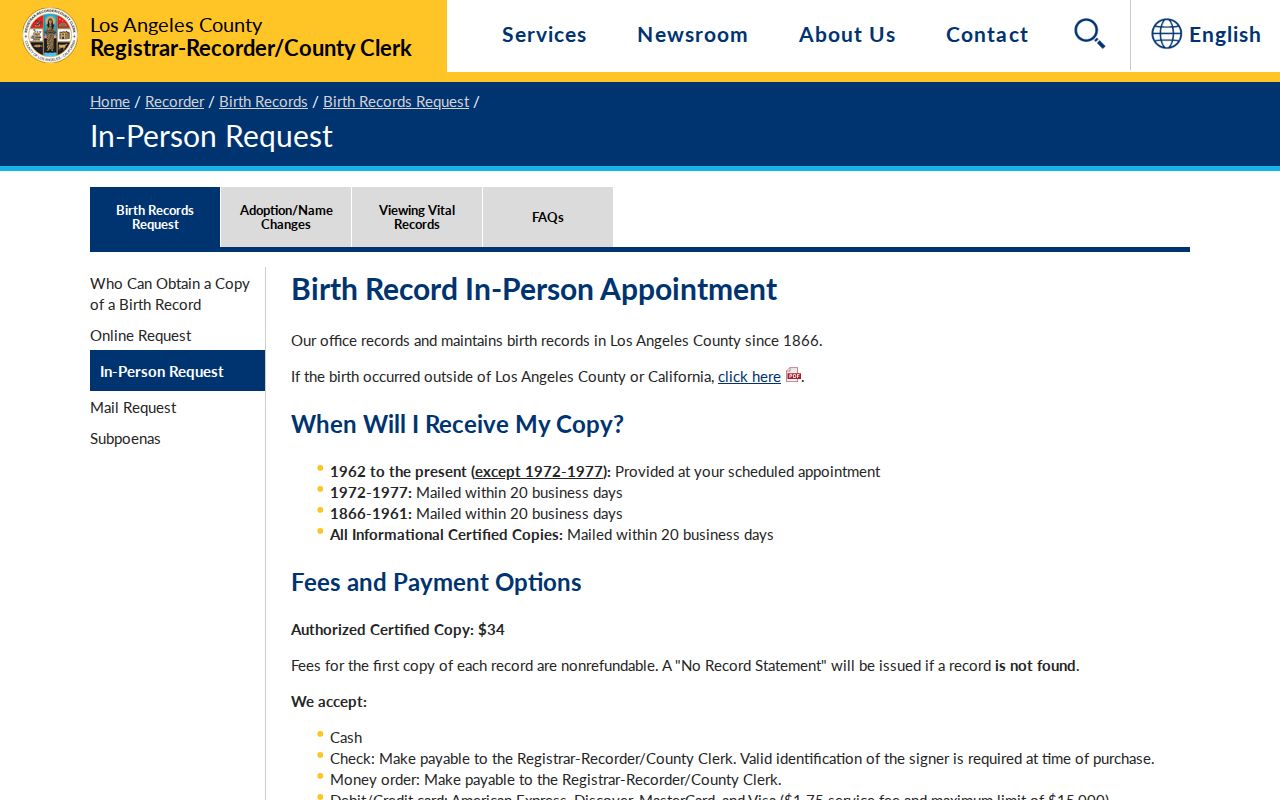
That form is a copy channel for an eligible record, not a free name-browsing directory. Public inspection also requires enough identifying information and does not permit random searches.
RR/CC vital-record viewing rules
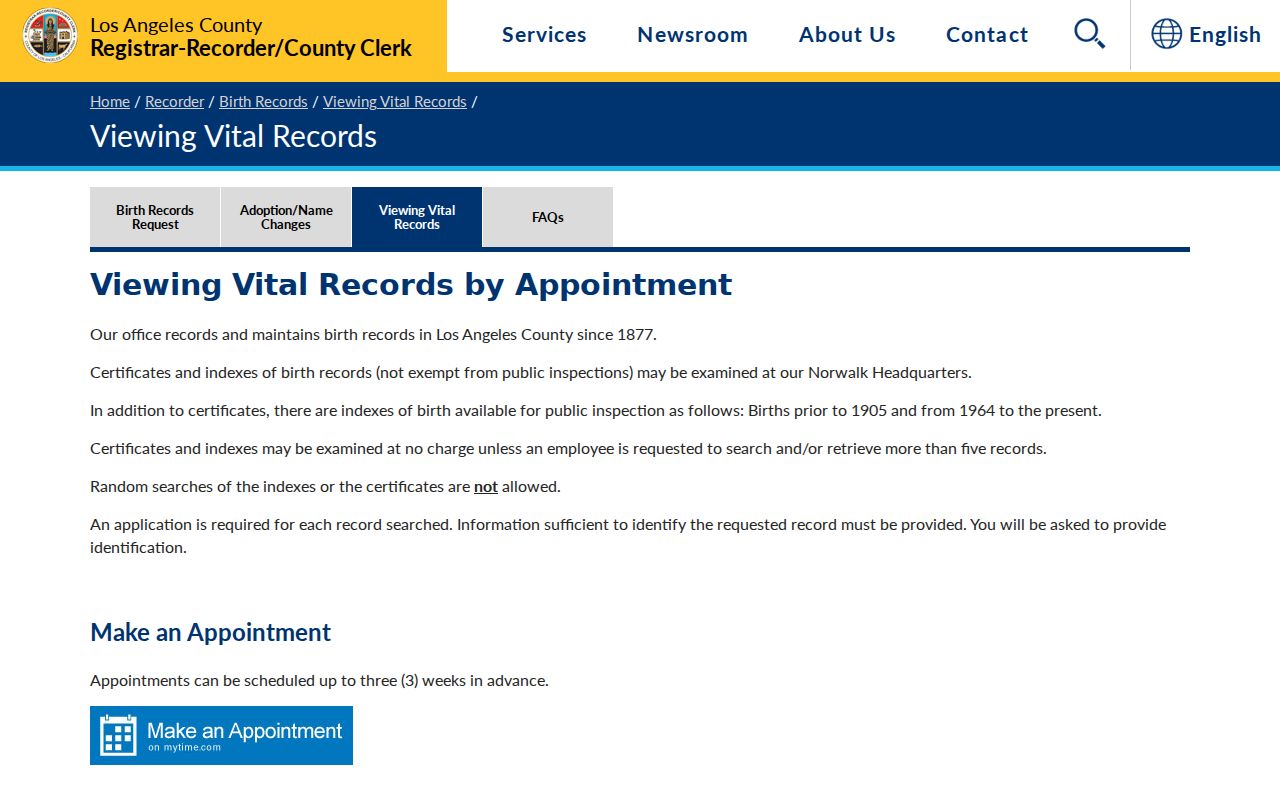
The vital-record rules help separate a historical index clue from a certified copy and keep a past-resident search within the custodian’s eligibility rules.
Lawful house history. Previous-resident research in Glendale is suitable for genealogy, family history, estate work, reunions, and personal curiosity. Public availability is not permission to follow, threaten, or expose a living person; California Penal Code section 646.9 addresses stalking.